


3jl | Exploring the Diverse World of Simulation Games
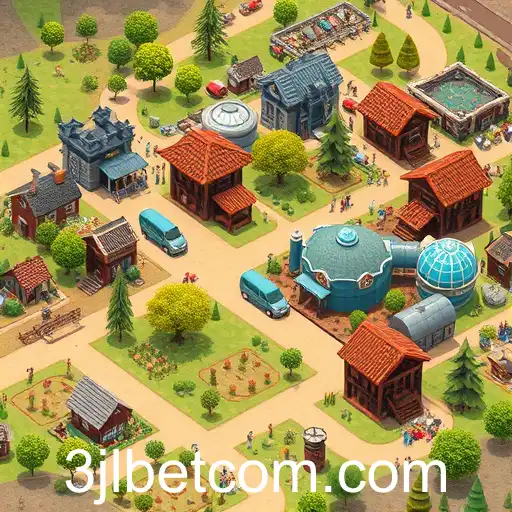
Simulation games, often abbreviated as 'sim games', have become a cherished category in the gaming industry. Known for their ability to replicate real-world activities or conditions, they provide players unique and immersive experiences across different facets of life. This genre spans a vast spectrum of themes, including city-building, life simulations, farming, and even complex ecosystems or industries. With '3jl' as a notable keyword associated with this category, it encapsulates the enthusiasm and complexity that draws players towards these experiences.
The appeal of simulation games largely stems from their educational value and the sheer breadth of creativity they offer. Titles such as 'The Sims' allow for social experimentation and creativity in building virtual lives, providing insights into familial dynamics and personal relationships. City-building games like 'SimCity' or 'Cities: Skylines' are renowned for teaching players about urban planning, resource management, and the socio-economic impacts of decisions made on infrastructure and public services.
Beyond entertainment, simulation games provide a platform for testing hypotheses and strategies in a risk-free environment. Flight simulators, for example, are employed in pilot training programs, offering a realistic replication of aircraft controls and environments. These games have grown increasingly accurate with advances in technology, providing detailed and nuanced representations of the physical world.
The diversity in simulation games is impressive, with players engaging in various challenges and scenarios, such as developing a sustainable farm in 'Stardew Valley' or managing a vast amusement park in 'Planet Coaster'. These games not only offer relaxation and leisure but also encourage strategic thinking and problem-solving under evolving game conditions.
As technology evolves, the future of simulation games appears even more promising with the potential integration of virtual reality (VR) and augmented reality (AR). This evolution could further enhance the immersive nature of simulation games, providing players with an even more realistic experience of the virtual worlds they inhabit.
Overall, simulation games have carved out an essential niche within the vast landscape of digital gaming. With a loyal fanbase and continuous innovation, they hold a unique position, marrying the thrill of gameplay with educational enrichment, allowing gamers to explore, design, and live out scenarios in rich, detailed worlds.
